THE REAL ESTATE MAP IN THE AGE OF ARTIFICIAL INTELLIGENCE: ENERGY, DATA CENTERS AND NEW INVESTMENT AXES
The Age of Artificial Intelligence Is Changing the Real Estate Map
Many people, when discussing artificial intelligence, focus only on the software side. New applications, automation systems, robots and digital tools make up the visible face of the agenda.
Yet behind the scenes, a larger and more physical transformation is taking shape. As artificial intelligence expands, data centers grow, energy demand increases, infrastructure investments change, and this process reaches as far as the development direction of cities.
Today, what we call technology investment is not only a digital field of production; it also means a physical investment base that requires energy, land, transportation, fiber infrastructure and operational capacity.
For this reason, in the age of artificial intelligence, real estate investment may no longer be assessed only through housing prices or conventional centrality criteria. In the coming years, new dynamics such as production, energy, technology and data infrastructure may have a stronger impact on the value of certain regions.
The Invisible Infrastructure Race
In the past, when assessing the value of a region, factors such as views, centrality, street access, proximity to shopping centers and social life were more prominent. These criteria still remain important.
However, another reality must now be considered in investment analysis: being close to energy, accessing infrastructure, and remaining within production and data flows are becoming increasingly critical.
As artificial intelligence systems expand, the world’s need for data processing and storage also grows. On the real estate side, this creates a new foundation that may affect not only building demand but also infrastructure and location preferences.
The following factors are becoming more visible on this new foundation:
- data centers and technology operation areas
- energy investments and proximity to transformer/transmission infrastructure
- fiber infrastructure and uninterrupted connectivity capacity
- industrial transformation and production areas
- logistics connections and accessibility
Therefore, location analysis is no longer limited to the question of “where?”. The more accurate question may be which production, energy, data and transportation systems that location is connected to.
A New Real Estate Period Is Beginning Globally
Today, data center investments are accelerating in many countries, from the United States to Europe. The issue is no longer only producing technology; it is also being able to establish the physical infrastructure required to operate that technology.
For this reason, while some cities attract technology investment, other regions may remain in the background. Regions with strong energy infrastructure, transportation access, industrial capacity, technical human capital and operational efficiency stand out more clearly.
Over time, this transformation also affects the real estate market. Wherever economic activity moves, investment interest and the perception of regional value may also tend to shift in that direction.
At this point, a data-driven investment approach gains importance. In the new period, value should not be assessed only by today’s price, but together with the region’s infrastructure capacity, development axis, zoning conditions, transportation links and sectoral demand structure.
Where Does Türkiye Stand in This Process?
In Türkiye, the relationship between artificial intelligence, data centers and real estate is not yet being discussed very loudly. However, some important signals have begun to emerge.
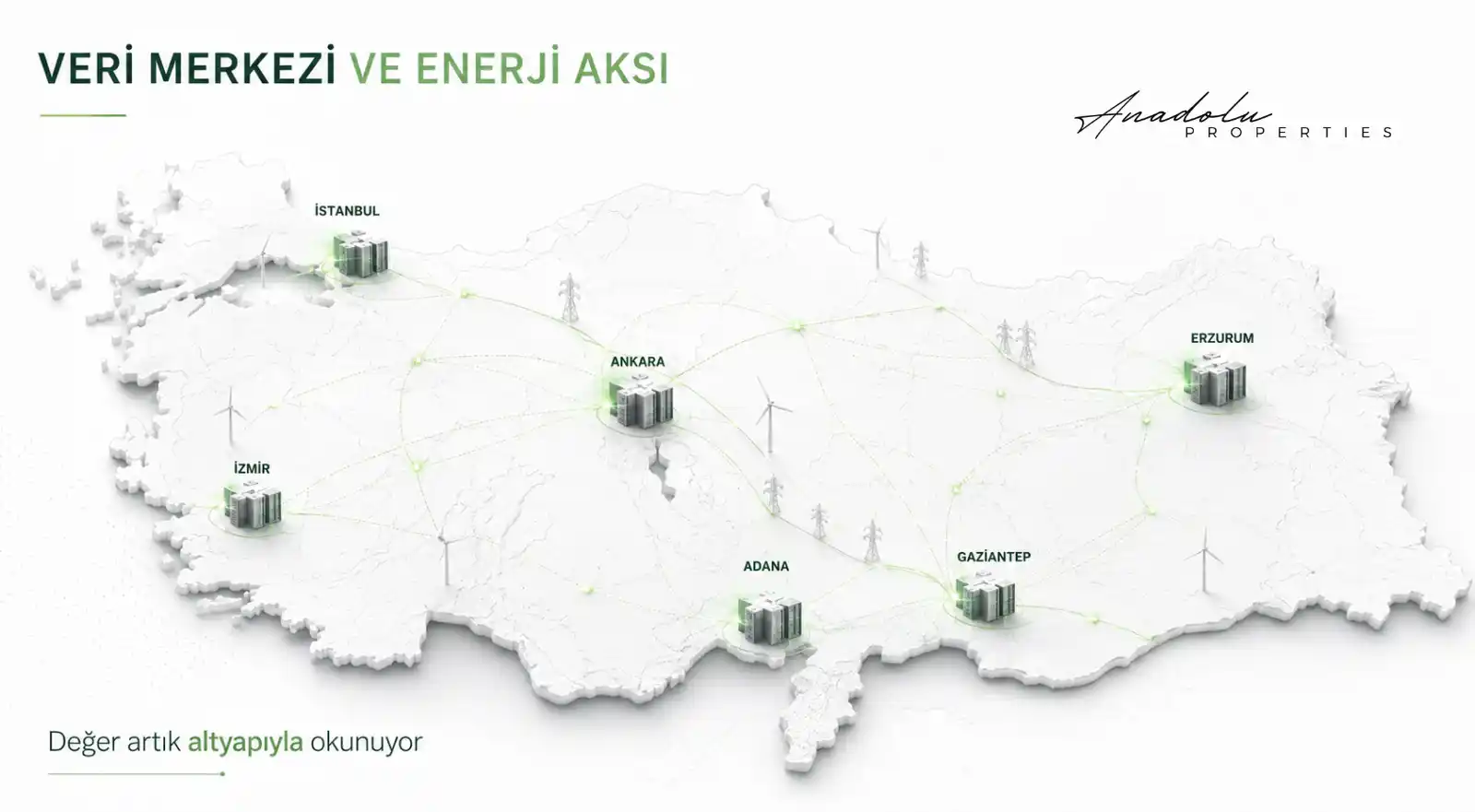
In particular, organized industrial zones, production corridors, energy investments, logistics lines, technology clusters and defense-industry centers may move certain cities into a different position.
In the coming period, not only housing but also industrial land, logistics regions, technology production areas and axes close to data infrastructure may gain greater importance.
This requires a more comprehensive perspective when evaluating real estate investment in Türkiye. When making a decision on land investment, field investment or commercial real estate, not only the listing price but also zoning status, infrastructure access, regional development plans, official data and field realities should be examined together.
A New Way of Reading for Investors
In this new period, the main issue for investors is not which region is “popular”, but which region can connect with new economic flows.
Areas where the axes of energy, data, production and logistics intersect may offer strategic indicators that can affect real estate value when analyzed correctly. However, these indicators alone are not sufficient for an investment decision.
The zoning conditions, ownership structure, infrastructure adequacy, access quality, environmental limitations and regional supply-demand balance of each location should be assessed separately. For this reason, valuation reports and investment analysis become a more central part of the decision-making process in the new period.
Especially for Turks living abroad and foreign investors who want to invest in real estate in Türkiye, access to accurate information is becoming critical. Supporting remote decisions with official data, location analysis and professional reporting is one of the key elements that reduces risk.
The New Dynamic Behind Value
Artificial intelligence is not only changing the technology sector. It is also beginning to transform cities, infrastructure, production systems and the investment map.
Many people still look only at the digital side of this change. Yet major transformations often begin first in infrastructure; they reveal themselves in energy lines, production corridors, data flows and transportation connections.
For this reason, to understand the valuable regions of the future, it is necessary to look not only at today’s prices but also at which infrastructure and economic systems the region is connected to. Sometimes the most noteworthy investment axes of the future may take shape in places that broad audiences do not yet associate with technology.
Mustafa Yılmaz
CEO – Anadolu Properties
Europe – Türkiye Investment Bridge