THE NATO ANKARA SUMMIT AND TÜRKİYE’S STRATEGIC VALUE: A NEW POWER MAP FOR INVESTORS
The Ankara Summit: Why Has Türkiye’s Strategic Value Become Visible Again?
NATO’s summit held in Ankara on 7-8 July 2026 was shaped around the objectives of strengthening the Alliance’s defence capacity, accelerating industrial production, sustaining support for Ukraine, enhancing artificial intelligence and cyber capabilities, and modernising air and missile defence.
In NATO’s Ankara Declaration of 8 July 2026, it was stated that the Allies reaffirmed their commitment to Article 5 of the Washington Treaty; that European Allies and Canada increased core defence investments by more than USD 139 billion in 2025; and that new procurement decisions worth more than USD 50 billion were announced in Ankara.
These figures should not be read merely as military spending. When defence expenditure increases, the metal industry, aviation, electronics, software, cybersecurity, artificial intelligence, logistics, energy infrastructure, skilled labour and organised industrial zones can also gain new growth dynamics.
Defence Spending Is Not Only a Military Budget
The Ankara agenda particularly highlighted deep precision strike capability, integrated air and missile defence, unmanned systems, intelligence capabilities, space, cyber assets and artificial intelligence models. All these topics point to a multi-layered production economy that goes beyond the classical defence industry narrative.
The economic impact of this transformation is not limited to prime defence contractors. Subcontractors, SMEs engaged in precision manufacturing, test centres, engineering firms, software companies, logistics providers, data centres, storage areas, technical education institutions and the need for qualified housing are natural components of this ecosystem.
The key question for investors is therefore this: In which cities, along which axes and in which types of real estate use can the growth of the defence and technology economy find concrete expression?
Türkiye’s Role Now Goes Beyond a One-Dimensional Bridge Narrative
Türkiye emerged from the summit not only as the host country, but also as one of the central countries of the strategic geography. As Black Sea, Eastern Mediterranean, Middle Eastern, Caucasus and European security were discussed simultaneously, Türkiye’s role became more visible.
Türkiye’s position within NATO is now expanding beyond what can be explained solely by the definition of a “bridge country”. Türkiye assumes a multi-layered role through defence production, energy transit routes, Black Sea security, Mediterranean sea lanes, migration and border security, critical infrastructure protection, unmanned aerial systems and regional logistics capacity.
According to Reuters, an important development during the Ankara Summit was the expansion of the Black Sea mine-clearing task force of Türkiye, Romania and Bulgaria to also protect critical infrastructure such as energy, telecommunications and subsea pipelines.
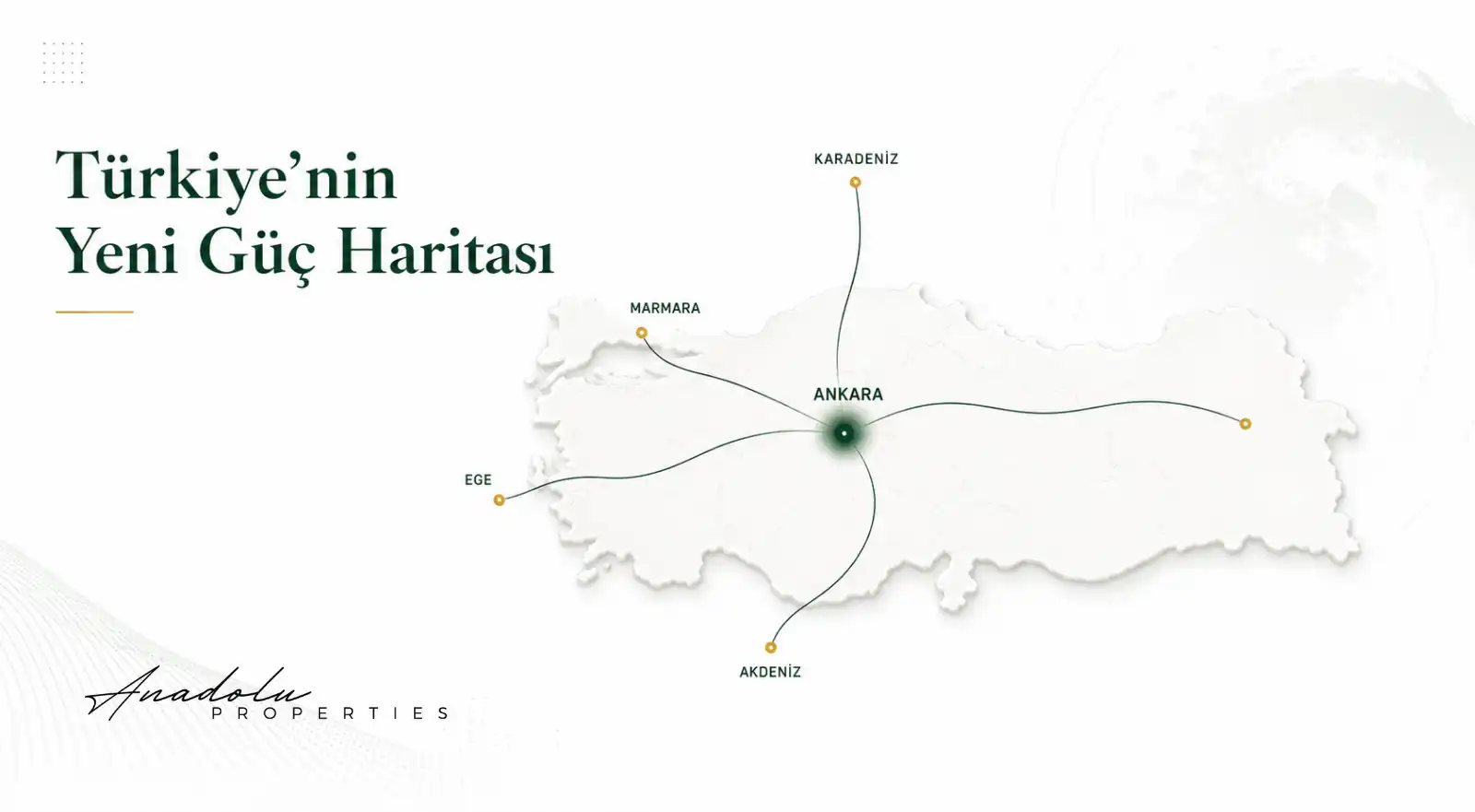
The meaning of this development for investors is clear: wherever the security architecture strengthens, infrastructure, logistics, production and real estate values in those regions should be re-analysed over the medium and long term. Türkiye’s Black Sea coasts, Marmara crossings, Aegean ports, Mediterranean energy routes, Central Anatolian production centres and defence industry clusters are becoming areas that must be monitored more carefully in this new equation.
The Defence Industry Forum and the Multiplier Effect of the Production Economy
One of the most important signals of the Ankara Summit was that the NATO Defence Industry Forum was held in Ankara. The forum addressed transatlantic defence production, investment, innovation, joint procurement, critical raw materials, unmanned systems, space surveillance, integrated air and missile defence, and the mobilisation of private capital for defence investments.
In NATO’s official statements, it was noted that the forum focused on converting the 2025 Hague defence investment commitments into concrete capabilities and industrial output. This approach shows that the defence economy will be shaped not only by public budgets, but also by private sector investment, joint procurement, production capacity and technological innovation.
For Türkiye, the multiplier effect of these topics is significant. Defence industry is not merely a few large companies producing final products. When sub-industries, machinery, metals, electronics, composites, software, cybersecurity, logistics and test infrastructure grow together, the reflection of this on the real estate market can be more selective, but also more durable.
A New Watchlist for Investors: Cities, Axes and Use Types
In this period, the main issue for investors is to ask the right question: “Which cities can integrate into this new defence and production economy?” While Ankara maintains its natural position as the centre, cities such as Eskişehir, Konya, Kayseri, Kocaeli, Sakarya, Bursa, İzmir, Balıkesir, Çanakkale, Mersin, Samsun and Tekirdağ may gain greater importance in terms of defence, aviation, logistics, industry and port connections.
Looking only at housing prices in these cities would be an incomplete reading. Industrial land, storage space, small-scale production facilities, logistics-connected commercial real estate, areas around technoparks, housing for qualified employees and mixed-use areas close to transport axes should each be analysed separately.
Ankara and the Central Anatolian Production Line
Ankara maintains its natural position as a centre for the defence industry and public decision-making mechanisms. Cities such as Eskişehir, Konya and Kayseri should also be on the medium-term watchlist due to aviation, machinery, rail systems, organised industry, technical labour and land logistics.
Port Cities and Critical Infrastructure Connections
The Mersin, İzmir, Samsun, Tekirdağ, Kocaeli, Çanakkale and İskenderun line may be read more strategically in terms of energy security, military mobility, trade, storage, port connectivity and supply chains. However, investment decisions in these regions should not be based solely on proximity to ports; zoning status, transport connections, industrial demand, rent multipliers and infrastructure capacity must also be considered.
A Strategic Reading Focused on Eskişehir
Eskişehir has the potential to become a strategic city in the defence-industry support chain through its proximity to Ankara, strong industrial culture, aviation background, university infrastructure, transport connections and qualified living standards.
In such cities, not only housing but also industrial land, storage areas, small-scale production facilities, logistics-connected commercial real estate and living areas suitable for demand from engineers and technical personnel should be monitored separately. Organised industrial zones, areas around technoparks, main transport axes and qualified housing demand should be assessed together in particular.
How Might Foreign Capital Read This Picture?
Foreign capital may read this picture in two ways. First, Türkiye’s geopolitical risks have not disappeared entirely; however, these risks are also among the factors increasing Türkiye’s strategic value. Second, NATO’s greater spending on defence production, supply chains and critical infrastructure security may make countries such as Türkiye more visible, given their production capacity, young population, geographical access and developing defence industry capabilities.
At this point, it would not be accurate to create an expectation of a definite and short-term capital inflow. However, strategic interest in Türkiye may increase over the medium and long term in the areas of defence industry, energy security, logistics, data infrastructure and critical production.
Especially in a period when Europe is increasing defence expenditure, NATO keeps the 5% defence investment plan on the agenda, and support for Ukraine is intended to be made sustainable, Türkiye’s production capability may become more important.
The Need for Selective Reading in the Real Estate Market
These developments should not be read from a real estate market perspective as meaning that “prices will rise everywhere”. A more accurate approach is to separate the impact by region and type of use.
In regions where the defence and production economy strengthens, industrial land, areas around organised industrial zones, storage areas close to logistics axes, port-connected commercial real estate, technopark surroundings and housing for qualified employees should be monitored more closely.
The effect on the housing side is more indirect. If defence and technology investments create qualified employment, this may support mid- to upper-segment rental housing demand, housing suitable for family life, residence needs and areas close to education and healthcare infrastructure in specific regions.
However, this effect will not emerge at the same pace in every city. Investors should evaluate employment data, industrial expansion plans, transport investments, land supply, population profile and rent multipliers together.
Anadolu Properties Assessment
The most important message of the Ankara Summit for investors is this: Türkiye’s value should be read not only through today’s economic indicators, but also through its role in the new security architecture.
NATO is no longer only a military alliance; it increasingly operates like a major economic bloc reorganising around production, technology, energy, data, logistics and critical infrastructure security. In this transformation, Türkiye’s geographical position, defence industry capability and regional reach gain greater meaning for investors.
What the market is not yet fully pricing today is the possibility that the defence economy may spread to Anatolian cities. This Ankara-centred wave may, over time, affect demand for industry, logistics and commercial real estate in cities such as Eskişehir, Konya, Kayseri, Kocaeli, Sakarya, Bursa, İzmir, Balıkesir, Çanakkale, Samsun and Mersin.
Long-term potential should be examined more carefully, particularly in cities such as Eskişehir, which have defence industry, aviation, rail systems, university and organised industrial infrastructure. In these cities, value growth should not be read only through housing, but also through industrial land, production space, technical staff housing, commercial areas, storage and logistics connections.
As Anadolu Properties, we view this picture not as a short-term price movement, but as a matter of 5-10-year strategic positioning. As Türkiye’s role within NATO strengthens, capital may look more carefully not only at İstanbul and coastal cities, but also at Anatolian cities with production, defence, energy and logistics capabilities.
What Should Investors Do?
Investors should read these developments not with an expectation of guaranteed gains, but with the logic of a strategic watchlist. A region’s association with the NATO or defence agenda is not, on its own, a sufficient investment rationale.
- Areas close to the defence industry, organised industry, technoparks, ports, railways, airports, energy lines and main transport corridors should be analysed separately.
- Zoning status, land supply, rental yield, sales velocity, population structure, industrial expansion capacity and infrastructure investments should be evaluated together.
- For industrial land and commercial real estate, areas close to organised industrial zones but not exposed to the risk of unplanned growth should be examined more carefully.
- In housing investment, it should be monitored whether the defence and technology ecosystem creates qualified employment.
The risk side should not be overlooked. Geopolitical tensions can accelerate capital inflows, but they can also increase uncertainty. Defence industry-oriented growth does not spread to every region at the same time. In some regions, expectations may be priced in early, while actual demand may be delayed.
Reading the New Power Map Through Data
The Ankara Summit created strong visibility for Türkiye. However, for investors, the real value lies not in today’s headlines, but in correctly reading in which cities, at what pace and with what depth these decisions will be reflected in production, logistics, technology and the real estate market.
For this reason, in the new period, a single news headline should not sit at the centre of investment decisions; official data, location analysis, zoning control, valuation reports, regional comparison and medium- to long-term strategic patience should.
Mustafa Yılmaz
CEO – Anadolu Properties
Europe–Türkiye Investment Bridge